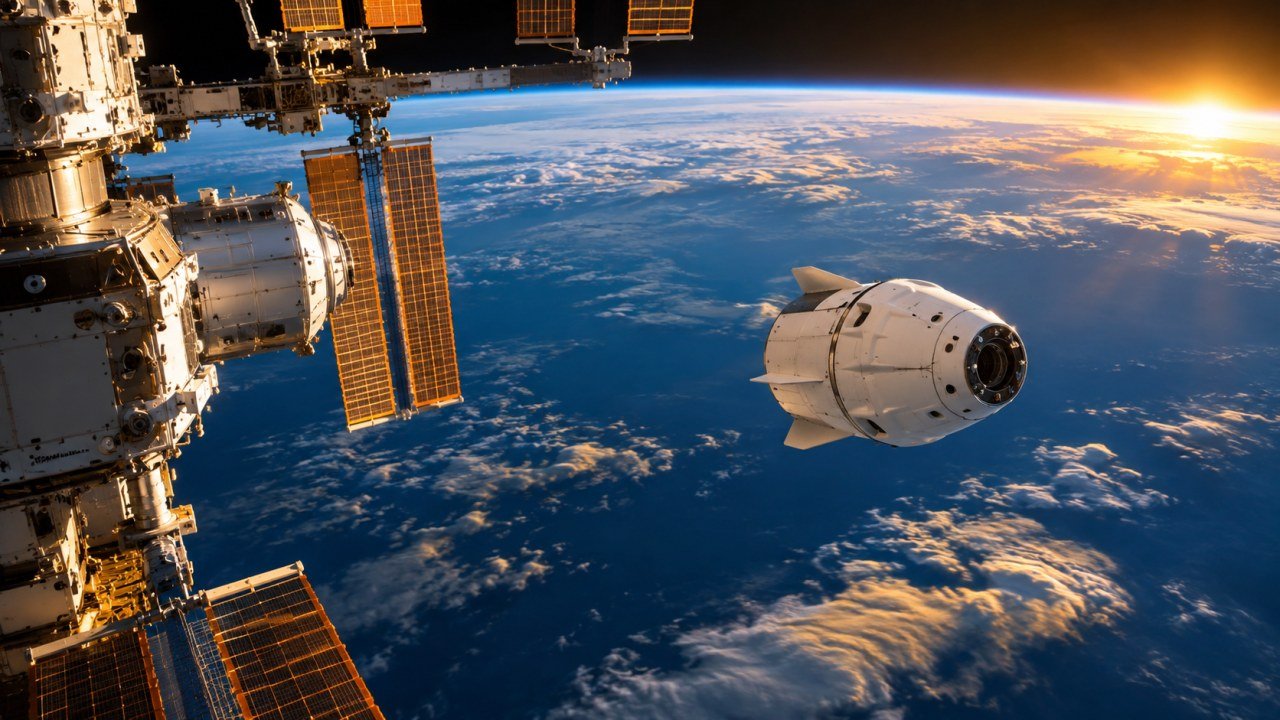
After two false starts, SpaceX's Dragon cargo capsule is finally on its way home. It pulled away from the International Space Station on Friday afternoon, ending a 36-day stay, and it is carrying a hold full of science that researchers on the ground have been waiting for.
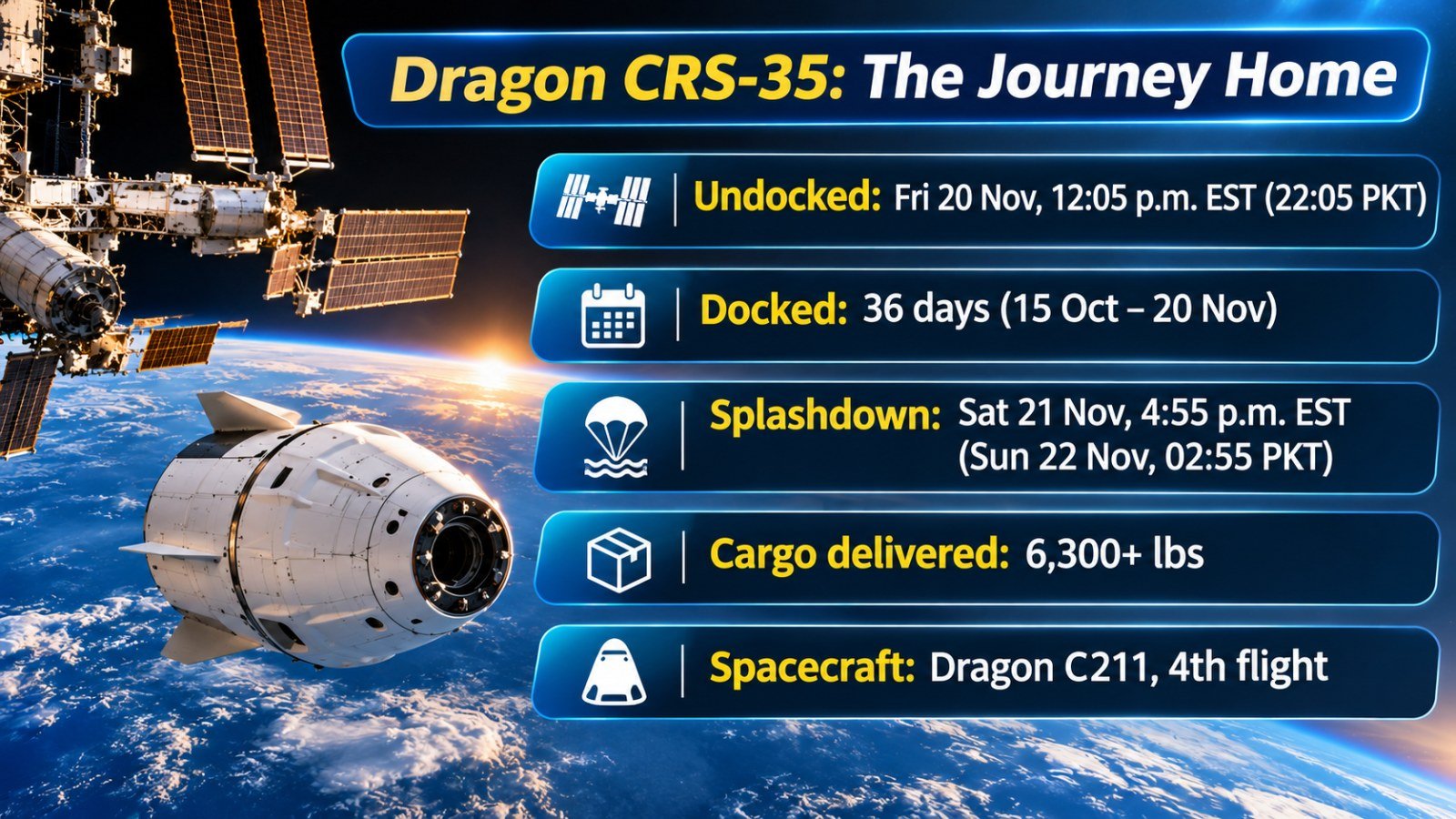
The uncrewed spacecraft undocked from the space-facing port of the station's Harmony module at 12:05 p.m. EST — 22:05 in Pakistan — on a command from SpaceX ground controllers. The departure had been watched closely all week, because the weather off the California coast had already forced NASA and SpaceX to call off two earlier attempts.
Now the waiting is over for the undocking at least. The next milestone is splashdown, due in the early hours of Sunday morning Pakistan time.
Third time lucky
Dragon was supposed to leave on Wednesday 18 November. Early that morning, NASA and SpaceX stood the attempt down: the weather at the splashdown sites off California was not good enough, and the forecast was not getting better. The next chance came on Thursday — and passed with Dragon still attached to the station.
Friday was the third opportunity, and this time everything went to plan. Dragon separated on schedule, fired its thrusters, and began moving safely away from the orbiting laboratory.
Nothing was wrong with the spacecraft at any point. Dragon was healthy, the crew was fine, and the station was in no hurry. The problem was always the ocean below. A capsule coming home under parachutes needs calm seas and clear skies for the recovery ships and helicopters waiting to pick it up, and rough weather in the recovery zone is reason enough to wait.
What's coming home
Dragon's return cargo is the reason this flight matters as much as the delivery that brought it up. More than anything else, the capsule is a flying laboratory fridge, bringing back samples that can only be studied properly once they are back on Earth.
The list reads like a hospital laboratory. There is a 3D-bioprinted blood vessel, grown in orbit to study how blood vessels age and how cardiovascular disease develops. There are frozen tumor organoids — tiny lab-grown tumor models that were treated aboard the station — which researchers hope will point to better cancer treatments and more personalized medicine. And there are frozen microbial samples, sealed up so scientists can work out how antibiotic-resistant bacteria survive, adapt and evolve in weightlessness.
A circadian lighting system is also on board, after more than three years on the station testing whether tuned light can help astronauts sleep properly on long missions. Alongside it travels the failed wrist joint from Canadarm2, the station's robotic arm. The joint failed in May 2026, drawing too much motor current, and the crew replaced it during a spacewalk on 30 June. Astronaut Jessica Watkins packed the failed joint for the trip home, and engineers want to take it apart on the ground to find out exactly what went wrong.
Some of this cargo is in a hurry. Samples kept in freezers need to reach laboratories quickly once they are back on Earth, which is one reason the weather delays were frustrating — every extra day in orbit is a day the science waits.
The journey home and splashdown
After undocking, Dragon began a journey of more than a day back to Earth, heading for a splashdown in the Pacific off the California coast.
Splashdown is targeted for about 4:55 p.m. EST on Saturday 21 November — 1:55 p.m. on the US West Coast, and 02:55 PKT in the early hours of Sunday 22 November.
One thing to know if you plan to follow the whole trip: NASA will not stream the splashdown. Updates will appear on the space station blog instead, so the final confirmation will arrive as a written post rather than live pictures.
The spacecraft and the mission so far
The Dragon flying this mission is C211, and it is no stranger to the station. This is its fourth flight — the same capsule previously flew the CRS-26, CRS-29 and CRS-33 cargo missions.
It launched on 13 October 2026 aboard a Falcon 9 rocket from Space Launch Complex 40 at Cape Canaveral Space Force Station in Florida, and docked to the Harmony module two days later, on 15 October.
On the way up, Dragon delivered more than 6,300 pounds of science and supplies. Among that cargo was the final pair of roll-out solar arrays, which completed the station's power upgrade — a milestone in its own right.
That is the shape of this mission: a major delivery on the way up, and a hold full of experiments and hardware on the way down. Once the capsule is fished out of the Pacific and its cargo is handed to the waiting scientists, the 35th SpaceX resupply mission to the station will be complete.
Frequently Asked Questions
When did Dragon undock from the International Space Station?
Dragon undocked on Friday, 20 November 2026, at 12:05 p.m. EST (22:05 PKT), from the space-facing port of the station's Harmony module, on command from SpaceX ground controllers.
How long was Dragon docked to the station?
Dragon was docked for 36 days, from 15 October 2026 to 20 November 2026.
When is splashdown, and will NASA stream it?
Splashdown off the California coast is targeted for approximately 4:55 p.m. EST on Saturday 21 November (1:55 p.m. PST), which is 02:55 PKT on Sunday 22 November. NASA will not stream the splashdown; updates will be posted on the NASA space station blog.
What science is Dragon bringing back to Earth?
Dragon is returning a 3D-bioprinted blood vessel construct, frozen tumor organoids treated aboard the station, frozen microbial samples, a circadian lighting system after more than three years aboard, and the failed Canadarm2 wrist joint, which was replaced on 30 June 2026 and packed by astronaut Jessica Watkins.
Sources
NASA — Space Station blog, "Dragon Undocks from Station Packed With Science and Cargo" (November 20, 2026).
NASA — Space Station blog, "Dragon Prepares to Depart Station for Earth Return" (November 20, 2026).
NASA — News release, "NASA to Cover 35th SpaceX Resupply Mission Space Station Departure" (updated November 19, 2026).
Related reading
Dragon Leaves Tonight: How to Watch the SpaceX Cargo Capsule Undock at 22:05 PKT — ISS Tracker
Dragon's Return Slips Again: NASA Now Targets Friday for Undocking — ISS Tracker
ISS Completes Final Solar Array Upgrade: Power Jumps to 215 Kilowatts — ISS Tracker