Progress 97 Docks With the ISS on Thanksgiving Day
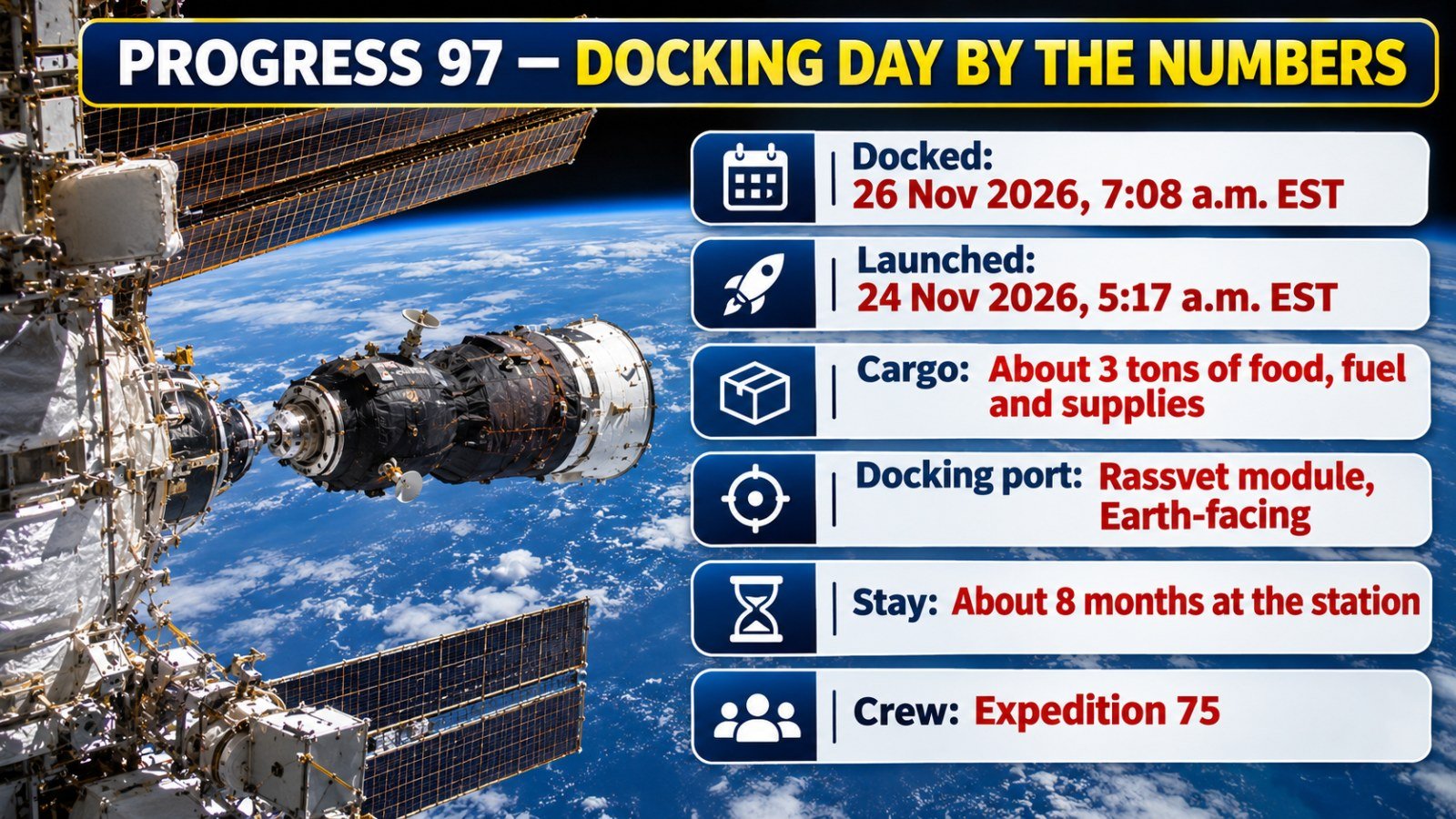
Russia's unpiloted Progress 97 cargo ship docked with the International Space Station on Thanksgiving Day, delivering about three tons of food, fuel and supplies to the Expedition 75 crew.
By Stephen Carter · November 26, 2026
Thanksgiving dinner arrived a little differently for the crew of the International Space Station this year. It came by unpiloted cargo ship, from a launch pad in Kazakhstan, and it parked itself.
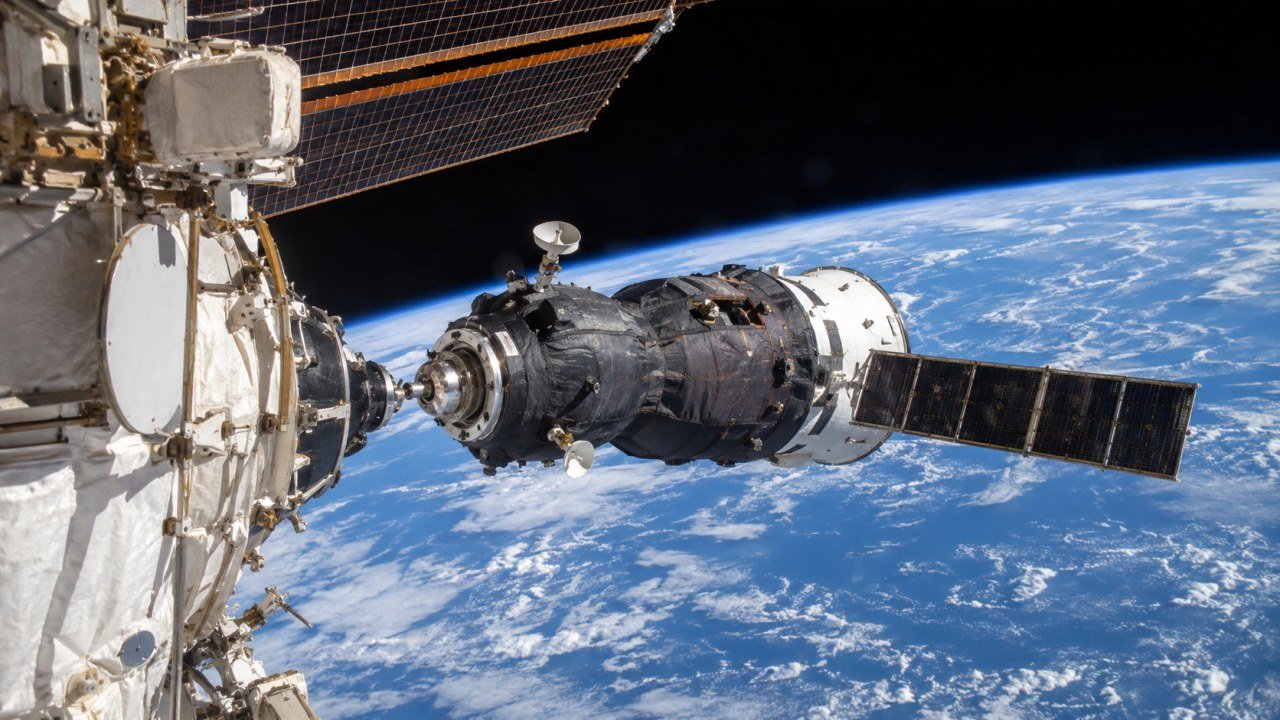
At 7:08 a.m. Eastern time on Thursday — 5:08 p.m. in Pakistan — the Russian cargo spacecraft Progress 97 eased into the Earth-facing port of the station's Rassvet module and locked on. Nobody was flying it. The docking was fully autonomous, the way these supply runs are designed to work, and NASA confirmed it in its morning update from the Space Station blog.
For the seven people of Expedition 75, it was the second piece of good news in three days. Progress 97 had only launched on Tuesday.
## Two days from Kazakhstan to the station
Progress 97 left Earth at 5:17 a.m. Eastern on Tuesday, 24 November — 3:17 in the afternoon at the Baikonur Cosmodrome in Kazakhstan — riding a Soyuz rocket into orbit. From there it was a two-day chase: a slow, careful climb to match the station's speed and altitude, then a final approach guided by its own navigation systems.
That is the normal rhythm for a Progress flight. These spacecraft do not hurry. They spend the time after launch checking their systems, raising their orbit in steps, and lining up behind the station before making the final approach. When the moment came on Thursday morning, the spacecraft did the docking itself, with flight controllers in Russia and the crew on the station watching.
It is worth pausing on that for a second. A three-tonne cargo ship crossed the gap between two objects moving at 17,500 miles an hour, lined itself up with a docking port the size of a doorway, and attached — with no one on board. That is routine now. It is also, when you stop to think about it, extraordinary.
## What is on board
NASA's account of the cargo is short: about three tons of food, fuel and supplies. No detailed packing list was published, and it would be wrong to invent one. But the categories themselves tell the story of what a space station runs on.
Food, because seven people eat three meals a day for months at a time, and there is no shop to pop out to. Fuel, because the station needs regular boosts to stay in orbit — the thin air at its altitude drags it down a little every day, and visiting spacecraft help push it back up. And supplies, which covers everything else a crew needs to live and work: water, oxygen, spare parts, clothing, science equipment, and the small comforts that make a metal box in orbit feel habitable.
Expedition 75 will now work through that cargo over the coming weeks, unloading what they need and stowing the rest. Fresh food is usually the first thing the crew goes for after a cargo ship arrives — after months of packaged meals, an apple or an orange is an event.
## Eight months parked at the station
Progress 97 is not going anywhere in a hurry. NASA says it will stay attached to the station for about eight months.
That long stay is part of the design. While it is docked, the spacecraft is more than a delivery van — it is extra storage, and at the end of its mission it becomes a rubbish truck. When it finally leaves, around the middle of next year, it will carry the station's waste with it and burn up in a planned destructive re-entry over the ocean. Nothing comes back. That is the deal with Progress: it arrives full and leaves full of trash.
It is an unglamorous job, and the station could not function without it. Every few months a cargo ship has to come, and every few months one has to leave the same way. Progress 97 is simply the latest turn of that wheel.
## Why the date matters
There is nothing special, technically, about docking on Thanksgiving Day. Cargo ships arrive when the launch windows and the station's orbit allow, and the calendar takes care of itself. But it is a good reminder of how the station keeps working through every holiday on Earth.
While families in the United States were sitting down to Thanksgiving dinner, the Expedition 75 crew were welcoming a delivery from Kazakhstan, on a spacecraft built in Russia, tracked by NASA — the same kind of international cooperation the station has run on for more than a quarter of a century.
The crew marked the day in their own way, with the usual research schedule and a cargo ship to unload. The station does not take holidays. That is, in the end, the point of it.
## FAQ
**When did Progress 97 dock with the ISS?**
At 7:08 a.m. Eastern Standard Time on Thursday, 26 November 2026 — 5:08 p.m. Pakistan time — on Thanksgiving Day in the United States.
**Where did Progress 97 dock?**
At the Earth-facing port of the station's Rassvet module. The docking was autonomous — the unpiloted spacecraft flew itself in.
**When did Progress 97 launch?**
At 5:17 a.m. Eastern on Tuesday, 24 November 2026 (3:17 p.m. Baikonur time), on a Soyuz rocket from the Baikonur Cosmodrome in Kazakhstan.
**What did Progress 97 deliver?**
About three tons of food, fuel and supplies for the Expedition 75 crew, according to NASA.
**How long will Progress 97 stay at the station?**
About eight months. It will then depart for a planned destructive re-entry that disposes of the station's trash.
**Is Progress 97 crewed?**
No. It is an unpiloted cargo spacecraft. It launched, flew to the station and docked without anyone on board.
## Sources
- NASA, "Progress Cargo Craft Docks to Station on Thanksgiving Day," NASA Space Station Blog, 26 November 2026 — docking time 7:08 a.m. EST, Rassvet Earth-facing port, about three tons of food, fuel and supplies, about eight months at the station, destructive re-entry, launch 5:17 a.m. EST 24 November on a Soyuz from Baikonur
- NASA, "Progress Cargo Craft Lifts Off to Resupply Expedition 75 Crew," NASA Space Station Blog, 24 November 2026 — launch details
## Related reading
- Progress 97 Lifts Off: Fresh Food, Fuel and Supplies on the Way to the ISS
- How Do Astronauts Drink Water on the ISS? Inside the Station's 98% Recycling System
- How Fast Does the ISS Travel? Speed, Orbit and 16 Sunrises a Day
- How Do Astronauts Sleep on the International Space Station?
Source note: This article is an independent summary of public space-agency information. Readers can verify the mission facts using the original source cited in the article.