ISS Tracker › Space News › What Do Astronauts Eat on the International Space Station?
Guide
What Do Astronauts Eat on the International Space Station?
Three meals a day, 250 miles above Earth. How astronauts eat from pouches, why tortillas replace bread, and the lettuce and chillies they grew on the station itself.
By Stephen Carter · November 17, 2026
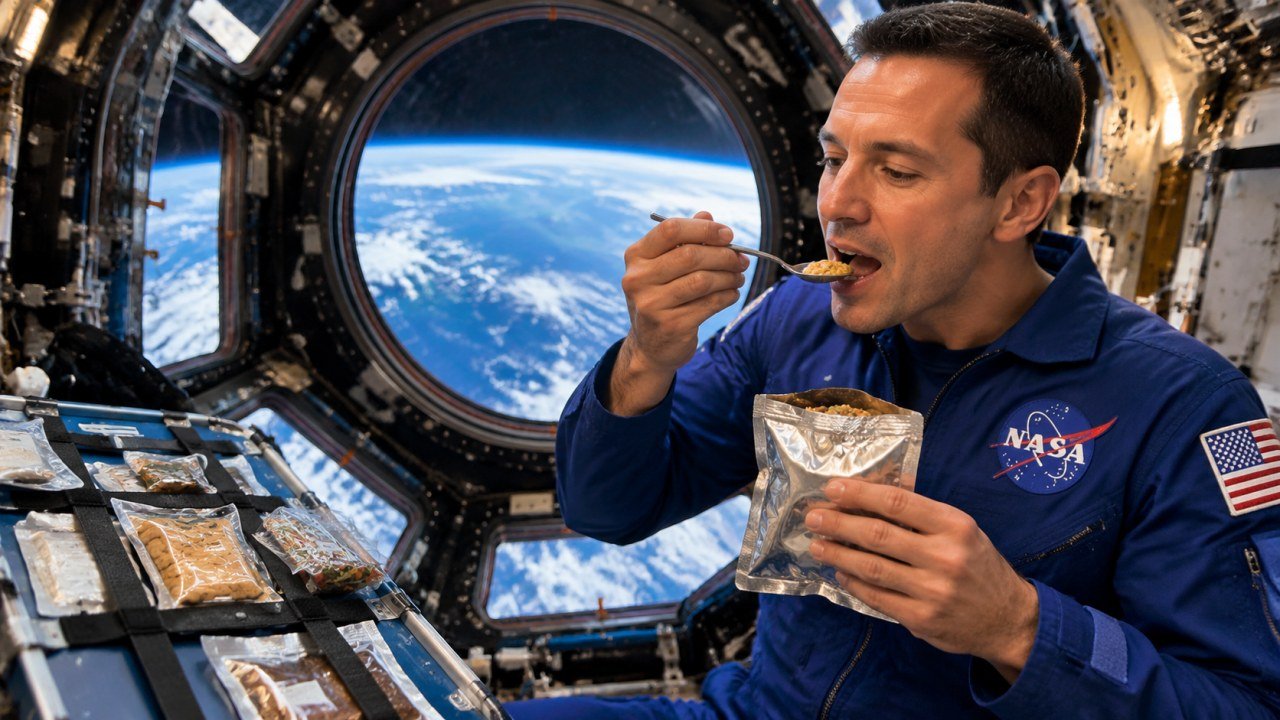
Picture dinner, 250 miles above Earth. There is no stove. There is no fridge. There is not even a table to set — and if you drop a crumb, it doesn't fall. It drifts off towards a vent, or an instrument panel, or somebody's eye. Eating in space is an engineering problem before it is a meal, and the International Space Station has spent a quarter of a century refining the answer.
No kitchen, no fridge — and no crumbs
The station carries no refrigerator for food. Everything is stored at room temperature and has to stay safe for at least a year. Some dishes go into a small food warmer; others are eaten as they come, or made ready with a squirt of hot water.
Fresh fruit and vegetables do arrive on cargo ships, but they are a treat with a deadline — the crew eats them within the first couple of days, before they spoil. And every meal needs holding down. Trays are fixed in place with Velcro, magnets and springs, and the cutlery is held the same way, because in microgravity nothing stays put on its own. Crews usually eat together, and on a six-month mission that shared table matters: it is one of the few ordinary, social moments in the day.
Six kinds of space food
Space food comes in six categories: fresh, natural form, rehydratable, thermostabilized, irradiated and dried. Fresh is whatever the latest cargo ship brought. Natural-form food needs no preparation at all — nuts, granola bars, crackers, tortillas, cookies, candy.
Rehydratable food has had its water taken out. Before eating scrambled eggs, noodles, mashed potatoes, shrimp cocktail, macaroni and cheese or spaghetti, an astronaut injects hot water into the pouch through a needle and waits for it to soften. Thermostabilized meals — soups, stews, lasagne, chicken dishes — are heat-treated to kill bacteria, then sealed in pouches or cans. Irradiated food, such as smoked turkey and chicken breast, is treated with radiation to destroy microbes. Between them, the six types give the crew real variety while keeping everything storable, safe and manageable in weightlessness.
Why tortillas beat bread
Ordinary bread simply doesn't fly. It sheds crumbs, and in microgravity crumbs don't land on a plate — they float into eyes and equipment. Tortillas took its place. They wrap around a filling, make almost no mess, and work for sandwiches and wraps alike.
Seasoning needed the same rethink. A shake of salt or pepper would send grains drifting through the cabin, so salt is dissolved in water and pepper is carried in oil. Small changes, but they show how much of ordinary eating has to be redesigned when gravity stops helping.
A day of meals in orbit
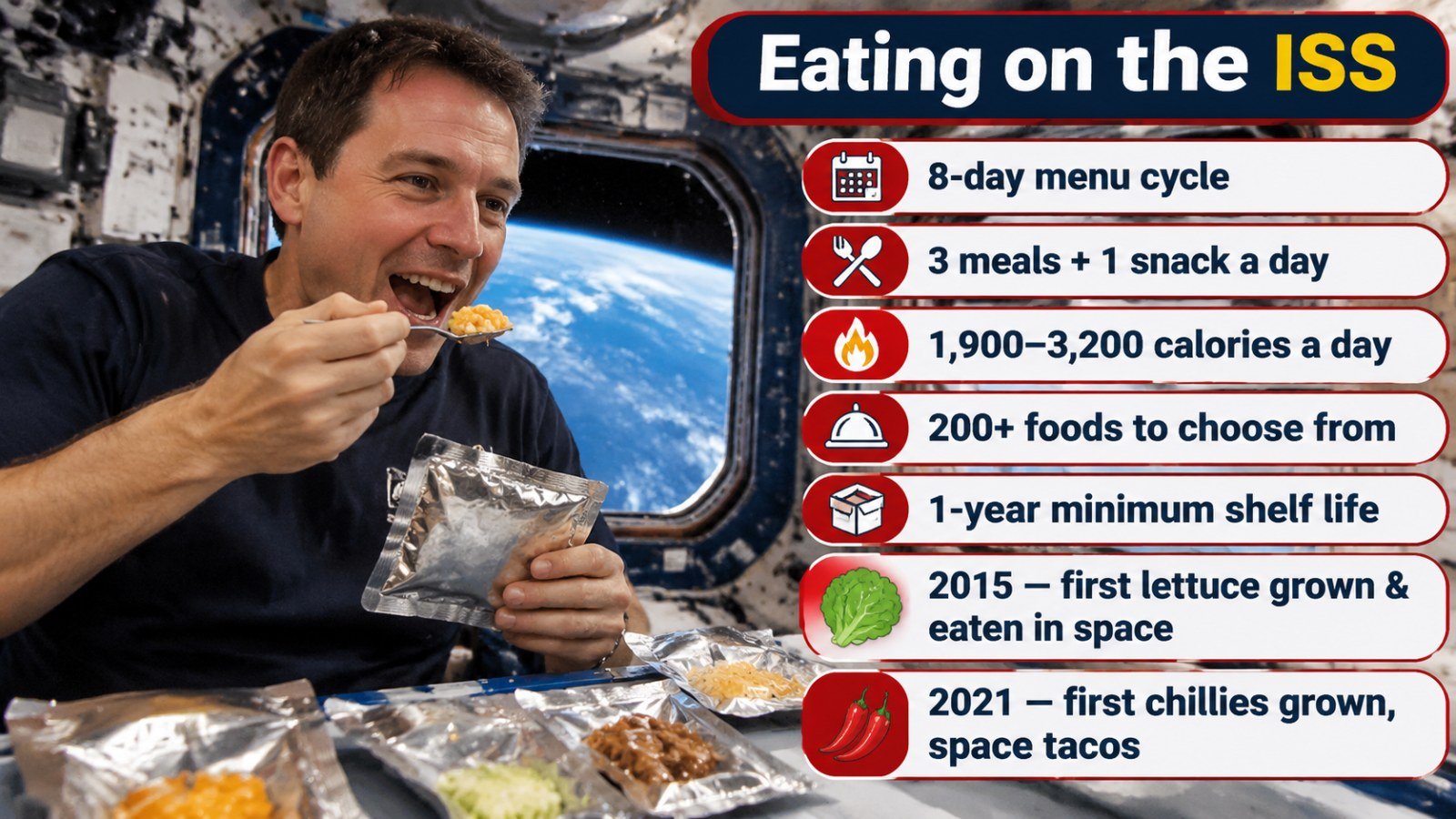
The station runs on a standard eight-day menu cycle: three meals and one snack a day. Astronauts generally need between 1,900 and 3,200 calories a day, depending on weight, sex and workload — NASA's planning figure averages around 3,035.
Nobody eats from a fixed list, though. About five months before launch, each astronaut sits down with dietitians at NASA's Space Food Systems Laboratory at Johnson Space Center and picks their own meals from a choice of more than 200 foods. The international partners add their own dishes to the mix — borscht, sushi, kung pao chicken — so the menu carries a little of every country that flies to the station.
Eating on the ISS — the daily menu at a glance.
Drinks, coffee and the floating cup
Pour a drink into a cup in orbit and it won't sit there. It forms a floating blob and wanders off. So drinks come as powders in sealed pouches: add water, sip through a straw. Coffee is on the list, and it is one of the most missed comforts crews ask for.
Taste itself changes up there. Fluid shifts towards the head leave astronauts feeling permanently congested, the way a cold does on Earth, and food tastes blander as a result. Plenty of crews reach for the hot sauce and the spiciest dishes on the menu — anything with a bit of a kick cuts through the stuffiness.
Fresh food — and food grown in orbit
The cargo ships bring apples and oranges; the station itself now grows food too. In 2015 the crew ate red romaine lettuce grown in the Veggie facility — the first food ever grown and eaten in space. In 2021 they grew red and green chile peppers and made space tacos with them.
It is a small harvest, but it points somewhere bigger. Fresh food grown on board adds variety no cargo ship can match, and for the longer missions ahead — to the Moon, and one day Mars — crews will need to grow a serious share of what they eat. The lettuce and the tacos were the first steps.
Frequently Asked QuestionsHow many meals do astronauts eat each day?
Three meals and one snack, on a standard eight-day menu cycle that keeps the food varied.
Can astronauts eat ordinary bread in space?
No. Bread makes crumbs, and crumbs float into eyes and equipment. Tortillas are used instead.
How long does space food keep?
Most of it must stay safe for at least a year at room temperature. Fresh fruit and vegetables should be eaten within the first couple of days of delivery.
Have astronauts ever grown and eaten food in space?
Yes. In 2015 they ate red romaine lettuce grown in the Veggie facility, and in 2021 they grew red and green chile peppers and made space tacos.
Sources
NASA — Space Food Systems Laboratory and station food research; NASA Technical Standard, Habitability Functions (food caloric content).
Canadian Space Agency — Eating in space: the ISS menu, food categories and daily calorie range.
Related reading
How Do Astronauts Sleep on the International Space Station? — ISS Tracker
How Does the International Space Station Get Electricity? — ISS Tracker
Source note: This article is an independent summary of public space-agency information. Readers can verify the mission facts using the original source cited in the article.